Facebook
  • Shockwave Equipment Shockwave Pneumatic Professional Ed Foused Shock Wave Therapy Machine Leg Pain Relief Machine
  • Shockwave Equipment Shockwave Pneumatic Professional Ed Foused Shock Wave Therapy Machine Leg Pain Relief Machine
  • Shockwave Equipment Shockwave Pneumatic Professional Ed Foused Shock Wave Therapy Machine Leg Pain Relief Machine
  • Shockwave Equipment Shockwave Pneumatic Professional Ed Foused Shock Wave Therapy Machine Leg Pain Relief Machine
  • Shockwave Equipment Shockwave Pneumatic Professional Ed Foused Shock Wave Therapy Machine Leg Pain Relief Machine
  • Shockwave Equipment Shockwave Pneumatic Professional Ed Foused Shock Wave Therapy Machine Leg Pain Relief Machine
  • Shockwave Equipment Shockwave Pneumatic Professional Ed Foused Shock Wave Therapy Machine Leg Pain Relief Machine
  • Shockwave Equipment Shockwave Pneumatic Professional Ed Foused Shock Wave Therapy Machine Leg Pain Relief Machine
  • Shockwave Equipment Shockwave Pneumatic Professional Ed Foused Shock Wave Therapy Machine Leg Pain Relief Machine
  • Shockwave Equipment Shockwave Pneumatic Professional Ed Foused Shock Wave Therapy Machine Leg Pain Relief Machine
  • Shockwave Equipment Shockwave Pneumatic Professional Ed Foused Shock Wave Therapy Machine Leg Pain Relief Machine
  • Shockwave Equipment Shockwave Pneumatic Professional Ed Foused Shock Wave Therapy Machine Leg Pain Relief Machine

Shockwave Equipment Shockwave Pneumatic Professional Ed Foused Shock Wave Therapy Machine Leg Pain Relief Machine

No.TB-SW003
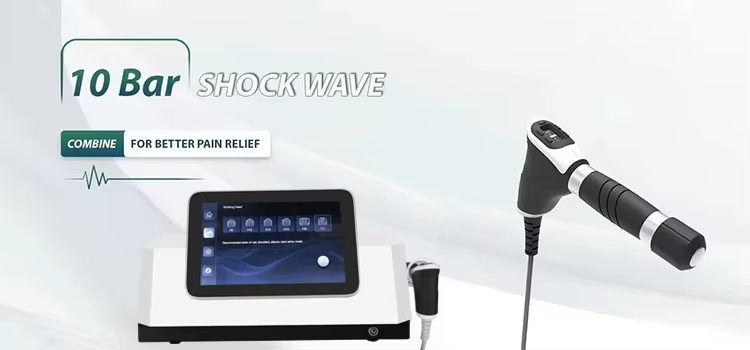
Pneumatic shockwave therapy is a non-invasive medical treatment that uses acoustic pressure waves to stimulate tissue healing. It works by sending high-energy waves through a handheld device, which are generated by compressed air firing a projectile that strikes a transmitter. These pressure waves penetrate the tissue, triggering a healing response by increasing blood flow and microcirculation to the area.
Power
300w
Vibration
3W/CM² & 1MHz
Frequency
10Bar & 21Hz
Treatment head
13PCS
Machine type
Table type
Treatment area
Legs/ hand /body /back

Description

Shockwave Equipment Shockwave Pneumatic Professional Ed Foused Shock Wave Therapy Machine Leg Pain Relief Machine


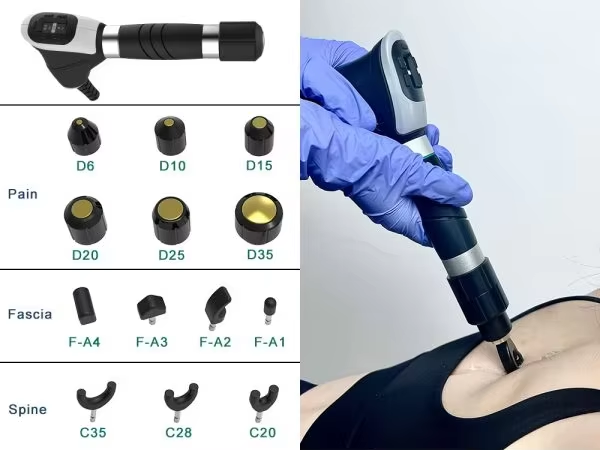
Shockwave Therapy Handpiece & Tips
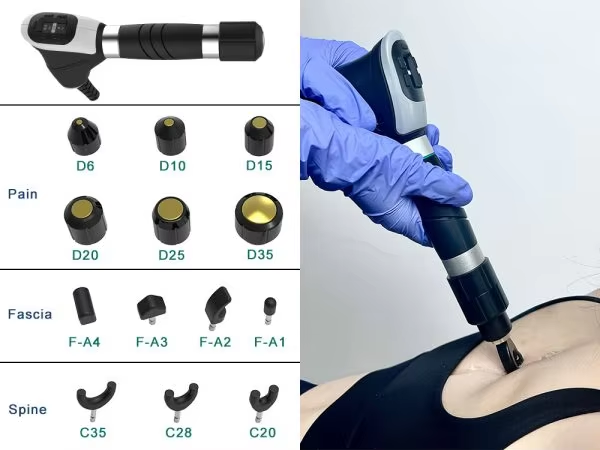
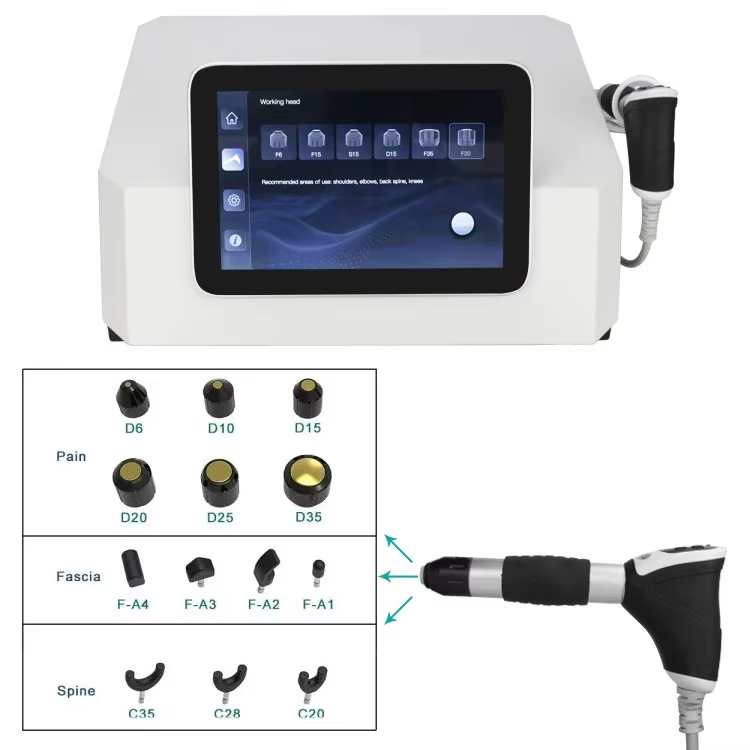
 * The lightweight and hand-held handpiece that can be fitted with 13 tips, depending on the area and
size of the tissue to be treated: 6 for pain relief, 4 for fascia treatment, and 3 for spine treatment


 * Energy up to 10 Bar, 0.1 Bar per adjustment
 * Frequency up to 21 Hz, 1 Hz per adjustment
 * Therapeutic penetration depth up to 80 mm
 * Bullet lifetime up to 3 million shots
 
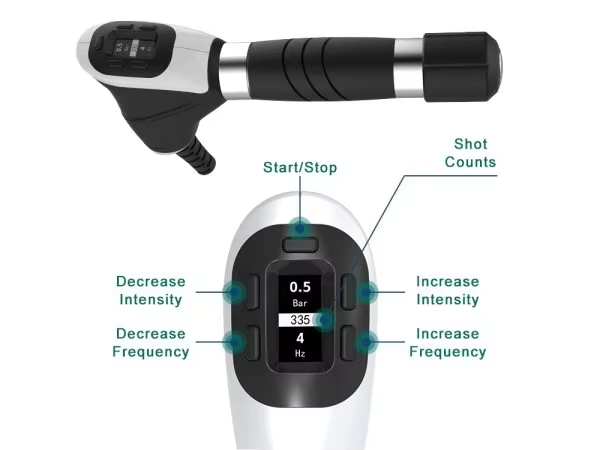
 * Built-in Start/Stop button, Intensity and Frequency adjustment button, and display screen showing
the real-time Intensity, Frequency, and Shot Counts


Versatile Handpiece

* New Shockwave Therapy Handpiece

* Built-in display screen to check the current Intensity, Frequency, and Shot Counts

* Built-in Start/Stop button to start and stop the treatment

* Built-in Intensity and Frequency buttons to adjust the Intensity and Frequency

Specification
Technology
Pnenumatic Shockwave
Shockwave energy
10Bar & 21Hz
Vibration
3W/CM2 & 1MHz
Function
Pain Relief, Physiotherpy


Product Overview

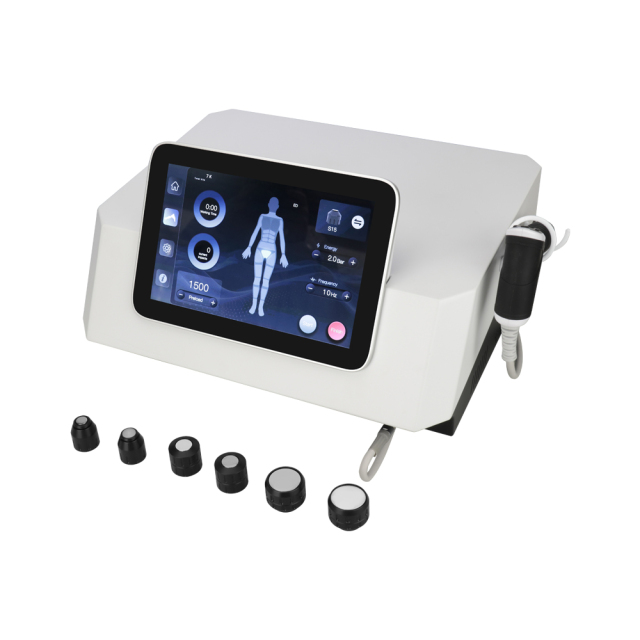
This table-top pneumatic shockwave machine gives a clinic one console for daily pain-relief and physiotherapy work. The pulse is generated mechanically: compressed air drives a projectile inside the handpiece, the projectile strikes a transmitter at the tip, and the energy leaves the handpiece as a radial acoustic pressure wave.

Because that wave travels through skin and soft tissue rather than stopping at the surface, it reaches the structures that usually sit behind the complaint — tendon insertions, muscle bellies and the tissue around joints. The response it triggers is local: better blood flow and microcirculation in the treated area, which is what the technique is used for in pain management and rehabilitation.

Nothing about the treatment is invasive. The handpiece stays on the skin, and the operator decides how hard and how fast each pass runs. Between patients the handpiece rests in the holder on the side of the console, so a single unit in its matte white housing fits a treatment room without taking the room over. Physiotherapy and rehabilitation practices, sports recovery rooms and clinics adding a pain-management service all run it the same way.

Key Features

  • Energy set in fine steps — up to 10 Bar with 0.1 Bar adjustment, so you can start below a patient's comfort threshold on sensitive ground such as the shin or the Achilles insertion and build up as the tissue responds.
  • Frequency from slow to fast — up to 21 Hz in 1 Hz steps: low settings for dense, small targets and high settings when you need to cover a broad muscle belly in the time you have.
  • Depth that reaches the working structures — therapeutic penetration up to 80 mm, which covers deep calf, gluteal and paraspinal tissue without swapping devices mid-treatment.
  • Wear parts you can plan around — the projectile is rated for up to 3 million shots and every shot is counted as it is fired, so a replacement is scheduled rather than discovered halfway through an appointment.
  • Stable output through a full clinic day — the pneumatic drive keeps the pulse consistent from the first patient to the last, and the console stays planted while the handpiece travels.
  • One console, more than one service — pain relief, physiotherapy and professional ED shock wave therapy device treatment all run from the same unit, so a clinic serves orthopaedic and ED patients without adding a second machine.

Shockwave Therapy Handpiece & Tips

The handpiece is the working end of this pneumatic shockwave machine, and one handpiece covers the whole treatment menu because the tip changes rather than the tool. Thirteen tips come with the unit, divided by the job they do: six for pain relief, four for fascia treatment and three for spine treatment.

Tip choice comes down to the area and the size of the tissue underneath it. The six pain-relief tips are the general-purpose set — rounded faces for muscle bellies, flatter faces for tendon insertions and trigger points, narrower diameters where the treatment area is small, such as the forearm or the top of the foot. The four fascia tips spread the pulse across a broader face, which suits long gliding passes along a fascial line. The three spine tips are shaped to sit either side of the spinous processes so the therapist can work the paraspinal muscles without driving energy into bone.

Changing tips takes seconds: each one push-fits onto the transmitter, so a therapist can move from a calf to a shoulder between patients without tools. Wipe the tip face after every session, check that it is fully seated before each treatment, and keep the set together so the right head is easy to find. A tip that is not seated properly will not deliver a clean pulse, and it is the first thing to check if the output feels weak.

Versatile Handpiece Controls

  1. Seat the chosen tip on the transmitter and check the fit before the patient is positioned — a partly seated tip dulls the pulse and wastes the first minutes of the session.
  2. Position the patient so the area is supported and the handpiece can travel along the tissue without the therapist reaching across the body.
  3. Set the intensity on the handpiece keypad; the keys on the handle and the console touchscreen stay in step, so either one can be used mid-session.
  4. Set the frequency the same way, matching it to the tissue: slower passes over dense tendon, quicker coverage across a broad muscle belly.
  5. Apply a thin film of coupling gel and press start on the handpiece itself, which keeps the therapist's other hand on the patient rather than on the console.
  6. Read the display as you work — it shows live intensity, frequency and the running shot count, so a long session stays inside the treatment plan.
  7. Press stop, wipe the tip face, and set the handpiece back into the side holder so the cable is supported and not left under tension.

Specification

TechnologyPneumatic shockwave
Shockwave energy10 Bar & 21 Hz
Vibration3 W/cm² & 1 MHz
FunctionPain relief, physiotherapy
Power300 W
Machine typeTable-top console
Treatment head13 tips
ModelTB-SW003
Handpiece displayLive intensity, frequency and shot count
Handpiece controlsStart/stop, intensity and frequency buttons built into the handpiece
Shot counterRunning total held on screen so projectile replacement can be planned
Handpiece holderOn the side of the console

Treatment Applications

  • Calf and shin complaints — tight gastrocnemius and shin splints are worked with the pain-relief tips in overlapping lines along the muscle, keeping the handpiece moving rather than parking on one tender point.
  • Heel and sole — the plantar fascia and the Achilles insertion take a flatter tip at lower energy, built up gradually because the tissue there tolerates less than a muscle belly.
  • Shoulder, elbow and forearm — rotator cuff tightness, tennis elbow and forearm trigger points, with the narrower pain-relief tips for the smaller structures around the joint.
  • Lower back and paraspinal muscles — the three spine tips sit either side of the vertebrae so the therapist can work the long muscles of the back without pressing on bone.
  • Sports recovery — post-training tightness and general soft-tissue recovery fit naturally into a clinic day, and the shot counter keeps a busy session traceable.
  • ED treatment — the same console runs professional ED shock wave therapy device protocols at low intensity with a single tip and a moving technique; the settings your clinicians use should follow the protocol they were trained in.

Ordering & Delivery

  1. Tell your sales contact which market the unit is going into so supply voltage, plug type and interface language are confirmed before production is scheduled.
  2. Confirm the accessories you want on the order — spare tips, spare projectiles and a machine trolley are the usual additions, and your sales contact confirms what is available for this model.
  3. If you are a pneumatic shockwave machine distributor, confirm branding and packing requirements with our team before the order is fixed, so the production slot and the artwork are agreed together.
  4. Agree price, payment terms, lead time and shipping terms in writing with your sales contact; they depend on the configuration and the destination.
  5. Check the packing list and inspect the console and handpiece on arrival, and report any transit damage to your sales contact before the unit is put into use.
  6. Keep the model and serial details on file — quoting them when you reorder tips or ask for technical help saves a round of questions.

Technical Support & Model Matching

Choosing the right equipment starts with a conversation. Our engineers and product specialists help distributors and clinics match configurations to their treatment menu, patient volume and budget, and confirm voltage, language and compliance requirements before production. After delivery we guide installation and commissioning, share operator training material and handle troubleshooting remotely, with spare parts from the same team that built your order. With 16 years of manufacturing expertise, an in-house R&D and design team and mature OEM/ODM processes, we can adapt a standard model or build a private-label version. Tell us your goal and we will recommend the right configuration.

FAQ

Q1. Which tip should I start with on a tight calf or an irritated Achilles?

On this pneumatic shockwave machine the six pain-relief tips do most of the leg work: a rounded face for the calf muscle belly and a flatter face for the tendon insertion above the heel. Keep the energy low for the first passes and build as the tissue tolerates it, moving the handpiece in overlapping lines rather than holding one spot.

Q2. Do we need a second handpiece to offer ED treatment?

No. The same handpiece runs the professional ED shock wave therapy device protocol — you change the tip and work at low intensity with a moving technique. Confirm the exact tip and starting energy your clinicians intend to use with our team before the service goes live, so the settings match the protocol they were trained in.

Q3. We are a pneumatic shockwave machine distributor — can we order this model under our own brand?

Yes. OEM and ODM work is part of our regular production, and our engineering team confirms what can be adapted for this unit — branding, interface and packing — before an order is scheduled. Send your requirements together with the market you sell into and we will come back with what is possible for this model.

Q4. What does the unit need on the clinic floor?

It is a table-top console, so it sits on a treatment counter or a machine trolley and needs a standard mains outlet. Confirm the voltage and plug type for your market when you order. The handpiece rests in the side holder between patients, and the touchscreen sits at an angle that reads easily from a standing position.

Q5. How does this differ from a focused shockwave device?

A pneumatic unit like this one releases a radial pressure wave from the tip, which spreads across a wider area — useful for broad muscle bellies, fascial lines and tendon insertions. A focused device concentrates the energy at a set depth for small, deep targets. Many clinics run a multi-tip pneumatic unit as the everyday workhorse and reserve focused treatment for specific cases.

CONTACT US

If you have any queries, get in touch today! Don't hesitate. We try to take the extra step for our customer satisfaction.
Name *
Email *
Phone *
Whatsapp
Country *
Message *
Please Enter The Verification Code , Thank you. *
Click to verify
Leave a message
Name *
Email *
Phone *
Whatsapp
Country *
Message *
Please Enter The Verification Code , Thank you. *
Click to verify
We use Cookie to improve your online experience. By continuing browsing this website, we assume you agree our use of Cookie.